We hold these truths to be self-evident, that all men are created equal, that they are endowed by their Creator with certain unalienable Rights, that among these are Life, Liberty and the pursuit of Happiness.
While these words were being forged by Thomas Jefferson leading to the birth of a new nation on the eastern seaboard of the North American continent, New Mexico was experiencing its own historical and cultural revolution.
Already peopled since prehistoric and ancient times by the Ancestral Puebloans, New Mexico, the land once called Cibola and Aztlan by Native peoples, was already a cultural, political and spiritual beacon when the United States of America took its first breath on 4 July 1776.
The Spanish were also first-comers to North America. They had established themselves in Mexico by 1520, Florida in 1565 and New Mexico in 1598. While the British can claim 1620 as the year of the start of English dominion over what would become the 13 colonies, Spanish language and culture, mixed with Mexican Indian, Puebloan and later arrivals such as the Navajo and Apache, were already surviving and thriving in New Mexico for over a generation.
This brilliant mix of Hispanic Europe and Hispanic America was creating something unique on the edge of Spain’s world empire, el reyno y provincia de Nuevo México, the kingdom and province of New Mexico.
There was suffering in both colonies. In the United States’ original colonies, the removal of Native peoples from their ancestral lands, their cultural eradication, happened, as did the forced enslavement of Blacks from Africa.
In New Mexico, while the medieval institution of encomienda that was imposed on the Pueblos in order to collect tribute in the 1600s was abolished, thanks to the Pueblo Revolt of 1680, there was still a system of cautiva, or captive, culture that was the result of warfare between Spanish and Puebloan factions on one side and Comanche, Apache and Navajo among others on the other side. As a result, Genízaro peoples and their cultural contributions to New Mexico were on the ascendancy in 1776. The Genízaros were the slave/servant class of New Mexico who were the result of warfare between differing Native peoples such as the Navajo, Apache, and Comanche and the Spanish, who often ransomed, or purchased these children of war.
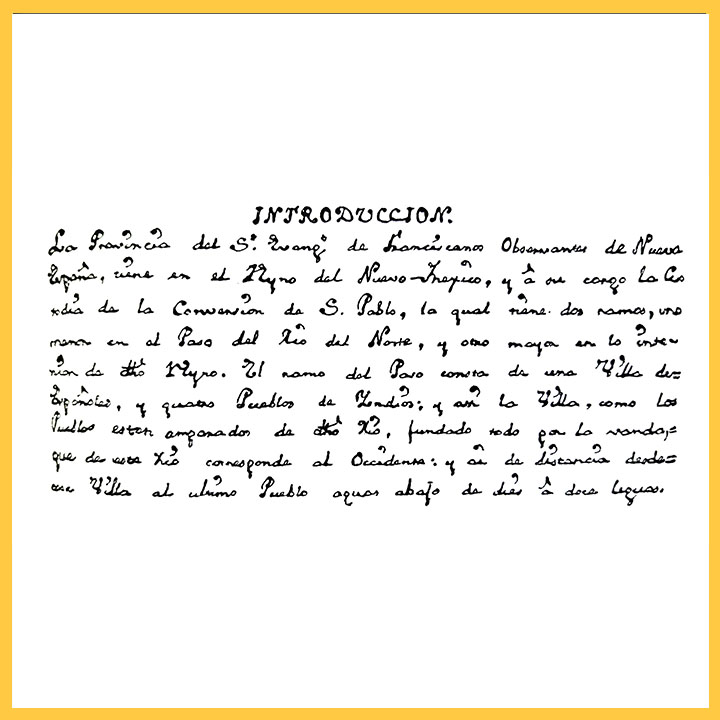
While Thomas Jefferson was writing the Declaration of Independence, as serendipity would have it, in New Mexico there arrived a Franciscan priest named Fray Francisco Atanasio Domínguez. He was commissioned to create a document, a report, on the spiritual and temporal condition of the small frontier community of New Mexico in Spain’s vast northern territory of Nueva España, New Spain, today Mexico.
Domínguez was from Mexico City, the vice–regal center of New Spain. Nothing of his life experience in that center of Spanish colonial power could prepare him for New Mexico. His sage, chauvinistic, even elitist, observations nonetheless provide a fascinating window into New Mexico in 1776.
Concerning the Pueblos, the priest could be generous in writing about their villages and farming techniques, though he was often critical of their so-called lack of initiative and misuse of the land, at least from his perspective. His harshest words were reserved for the Genízaros of Abiquiu whom he described with these words:
Those who have taken root here and their progeny speak Spanish in the manner described with regard to the Santa Fe genizaros, for they all come from the same source, and these were taken for this pueblo. There is nothing to say about their customs, for in view of their great weakness, it will be understood that they are examples of what happens when idleness becomes the den of evils. (Missions of New Mexico, 1776; translated and annotated by Eleanor B. Adams and Fray Angelico Chavez; 1956, University of New Mexico Press; p. 126)
As for the Spanish people of New Mexico, Domínguez was not impressed. Nowhere does he say they were very European or the same as the Spanish people from Spain he must have seen in Mexico City, or those Mexican–born Spaniards of his home. Here is how he described the Spanish New Mexicans of Santa Fe in 1776:
All the parishioners of this villa, including the settlements described, as I shall explain, speak the Castilian tongue simply and naturally among themselves, with the exception of the Europeans and other people from lands educated in speaking with courtly polish. This applies to the Spaniards, most of whom have servants of different classes, for only as a last resort do they serve themselves. (Missions, p. 42)
Concerning the Spanish folk of Cundiyó:
The citizens of this Cundiyó pass for Spaniards. They speak their simple Spanish, as do their servants, who are of various classes. (Missions, pp. 59-60)
Of the Spanish people at Santa Cruz de la Cañada:
Suffice it to say that most of them pass for Spaniards. Some necessarily have servants while others do not, but all speak the Spanish current and accepted here. (Missions, pg. 84)
Domínguez makes a clear distinction between European Spaniards, educated Spaniards, and what he experienced in New Mexico. It should be mentioned when he says the New Mexicans speak Castilian, he means Spanish in general, not the dialect found in central Spain even to this day. He is being generous when describing New Mexico’s Spanish language, which by 1776 had already developed and evolved into something unique to the northern region of New Spain. It was a mountain Spanish, the Spanish of rural people that served their purposes of farming, ranching, hunting and fighting enemy nations that surrounded New Mexico at that time. As for some New Mexicans “passing for Spanish”, he knew something was racially different about the Spanish New Mexicans, who, while claiming to be Spanish, were clearly the result of cultural and biological mixing with Native peoples that had occurred through the generations.
There is so much more that can be said about the Domínguez report. Suffice to say, what we learn from his observations is Nuevo Mexicano culture was already coming into its own by 1776, a people and heritage that had broken from Spain long ago, and had a tenuous connection to Spanish centers of urban life to the south. While it is a stretch to mention the documents composed by Thomas Jefferson and Fray Atanasio Domínguez in the same breath, both works reveal the immense significance of primary sources in understanding the development of peoples in two separate European colonies in the wilderness of North America in that watershed year of 1776.