From 1900 onward, several themes and settings have been of central importance for novelists and historians as they have dealt with the state of New Mexico in their writings. Looking forward to the country’s 250th anniversary, it is rewarding to consider and evaluate how New Mexico writers have treated ideas, places and people in this state. This discussion uses literary geography to provide a brief overview of how novelists and historians have utilized New Mexico themes and settings.
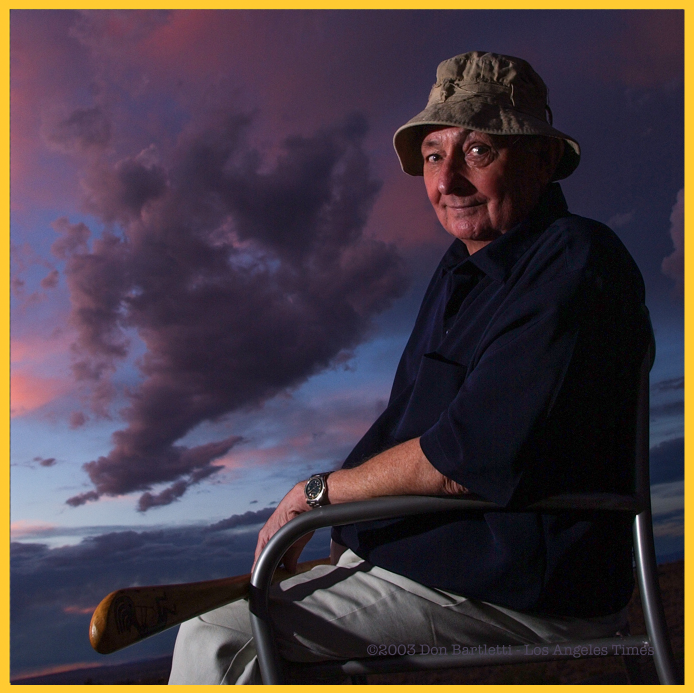
Not surprising, many of New Mexico’s leading novelists and historians have viewed the state from their homes in Albuquerque and Santa Fe, but their books have dealt with many diverse themes and sections of the state. One of the most distinguished of past New Mexico authors is Marc Simmons, a historian who lived on the outskirts of Cerrillos, between Albuquerque and Santa Fe. Simmons, with a doctorate in history but who chose to live alone and to follow his own paths in his writings, became known as a “maverick historian.” He provided balanced accounts of Spanish Basque leader of New Mexico Juan de Oñate, frontiersman Kit Carson and several Indian groups. In his nearly 40 books and thousands of newspaper stories, Simmons dealt with the Santa Fe Trail, the city of Albuquerque, and numerous other 19th and 20th century topics. For Marc Simmons, any happening, person, place or idea in New Mexico, was worthy of careful, sustained study.
Another author, Agnes Morley Cleaveland, added much to the themes and settings in her New Mexico writings. Born in Cimarron and later living near Datil, Cleaveland experienced the outback West. When her parents disappeared from the scene, she and her brother did the ranching. Cleaveland became an unusual cowgirl. Later, she produced a memoir-like account of her life-changing experiences in her book, No Life for a Lady (1941). The book provided a revealing story of a woman, not the usual male cowboy, growing up on a cattle ranch and learning how to ride, round up and brand. Here was a species of history unusual for much of the Western literary scene.
Novelist Max Evans suffered some transitions similar to those that vexed Cleaveland. Living some years in northeast New Mexico that overflowed into Colorado, Oklahoma and Texas, Evans knew ranch country firsthand. But it was the changes and shifts that bothered Evans. In his first novel The Rounders (1960) and his later Hi Lo Country (1962), Evans deals with cowboys and ranchers beset with these upsetting changes. Both novels became films, appealing to readers and watchers who also were emotionally stymied by too many shifts in their worlds.
Still another writer who dealt with the “stuff” of the cattle country was Eugene Manlove Rhodes. Living for several years in areas of New Mexico near Tularosa and the San Andres Mountains, Rhodes knew New Mexico deserts and mountains, cattle country and cowboying. In Pasó Por Aquí (1926), Rhodes pictures a cowboy on the run from the law but willing to help needy peoples. It was a moving story. In fact, so attractive was this story and other Rhodes writings that some readers ascribed a popular New Mexico motto to him — “Land of Enchantment.” Like Max Evans, Rhodes also was bothered by the shifts going on in cowboying and the cattle-raising business.
Mabel Dodge Lujan was a woman of another sort who proved a diligent literary and artistic enhancer in New Mexico. After several unsuccessful marriages, she moved to Taos and before long married a Native American man named Tony Lujan and established a home that welcomed dozens of cultural visitors. Among these visitors was the notable English author D. H. Lawrence and American writers, such as Willa Cather, Mary Austin, Frank Waters and Walter Van Tilburg Clark. At Lujan’s urging, several of these visitors, including Cather and Austin, later wrote a variety of books about New Mexico.
Frank Waters also lived in northern New Mexico and wrote about Indian experiences, including their contacts and conflicts with whites. His novel The Man Who Killed the Deer (1942) focused on the Pueblo man Martiniano whose life illustrated these competitions between Native American and white cultures. It was a compelling work of fiction illuminating Pueblo cultural life.
Since Billy the Kid is the most-written-about New Mexican, a large number of writers, especially historians, have written about the Kid living at several sites: for instance, Silver City, Lincoln and Fort Sumner. At the end of the 19th century, Pat Garrett launched the first of the Kid biographies, and in 1926, Walter Noble Burns produced a positive portrait of Billy in The Saga of Billy the Kid. Later, many authors moved to turn out middle of the road publications on the Kid’s life in southwestern and southeastern New Mexico. Englishman Frederick Nolan was the leader of these in-between views of the Kid and his surroundings. Robert M. Utley, noted American authority on the West, also contributed studies of Billy as both an outlaw and a friend. These two authors and several other recent writers have produced books that avoided too-negative or too-positive views of the Kid. The rural stories surrounding Billy the Kid and particularly his life in southeastern New Mexico make up the largest collection of New Mexico writings outside the larger urban areas.
A large, major shift in recent New Mexico literary geography is the shifting interpretative change in writings about Native Americans. Writers in the state, like other authors in the U.S. in the 1960s and 1970s, moved away from the previous negative portraits depicting Indians as “savages” or “barbarians.” Instead, most recent novelists and historians have produced positive portraits. Among the novelists and historians in New Mexico, no one turned out more supportive and creative Indian peoples and scenes than Tony Hillerman. From The Blessing Way (1970) forward, Hillerman wrote 18 novels about Navajo policemen Joe Leaphorn and Jim Chee. Hillerman’s novels contain supportive and revealing depictions of Navajo culture and society, the physical layouts of their reservation, and informative contacts between Indians and whites. More than anyone else, Hillerman brought positive Indian characters and culture onto the New Mexico literary scene.
Native American writers have also added significantly to indigenous sites in New Mexico literature. The most important of these contributions is N. Scott Momaday’s House Made of Dawn (1968). The novel traces the life of Abel, a young Native American veteran who returns to his home in northern New Mexico at Jemez Pueblo, trying to control his emotions. The novel was awarded a Pulitzer Prize. Another significant work by an indigenous author is Leslie Marmon Silko’s Ceremony (1977). It too deals with Indian life in another site, Laguna Pueblo, and overflows with Native American culture at that location.
Recently, historians of New Mexico have followed separate, diverse routes in their histories. Some, like John Kessell, have given us superb works on the early years of New Mexico, on Native Americans and on Spaniards. Some, like Paul Andrew Hutton, have produced bestsellers, such as The Apache Wars (2017) and The Undiscovered Country (2025), which traces frontier movements from the East to the West Coast. In addition, Ferenc Morton Szasz produced vital information on religion in New Mexico and the American West and turned out a notable story of another significant New Mexican story in his book, The Day the Sun Rose Twice: The Story of the Nuclear Explosion, July 16, 1945 (1984). Readers should not overlook other general overviews of important literary segments of the state’s history. For Hispanic/Chicano books, they must read Rudolfo Anaya’s first-rate novel, Bless Me Ultima (1972) and examine David R. Maciel and Erlinda Gonzales-Berry, eds., The Contested Homeland: A Chicano History of New Mexico (2000). On another key subject, readers should read Joan M. Jensen and Darlis Miller, eds., New Mexico Women: Intercultural Perspectives (1986).
This very brief overview of authors and their writings during the past century and a quarter provides a short introduction to important subjects for understanding New Mexican literary history on the horizon of celebrating the U.S.’s 250th birthday. Writers, through their themes and settings, help us to comprehend the complexities and changes that define our histories, whether they be regional, national or personal. We hope that readers will be story-catchers, seeing how a closer examination of the writings of novelists and historians helps us to better comprehend the past, shifts into the present, the present itself and perhaps even glimpses into the future.